Make Money: Word Search
PAmosWord
4.8414.00 Reviews
- Version
- 1.0
- Installs
- 100.00K
- Age Rating
- Mature 17+
Screenshots



Our Review of Make Money: Word Search
 Analysis by Appyee
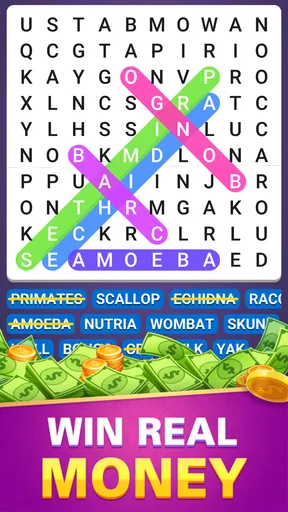
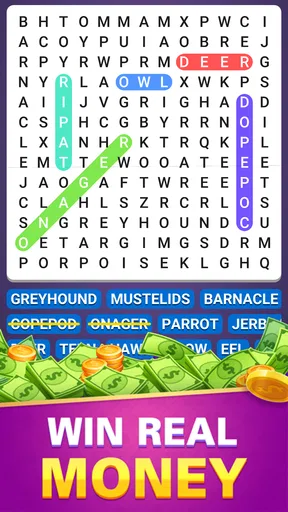
Make Money: Word Search is a free word game from PAmos that immediately presents a familiar idea: scan a letter grid, spot hidden words, and keep moving through puzzles. I found the basic appeal easy to understand within minutes. It is the kind of game I can open while waiting for an appointment, taking a short break, or winding down without having to learn complicated controls.
The money angle changes the way I look at it, though. A normal word-search game asks whether the puzzles are enjoyable enough to keep playing. This one also invites me to think about rewards, expectations, and whether the routine remains worthwhile once the initial curiosity disappears. My honest view is that the puzzle format is approachable, but the lasting value depends much more on how consistently the game keeps the activity satisfying than on the promise suggested by its short description.
How the first week feels
During the first sessions, the strongest part is the low barrier to entry. Word searches are self-explanatory, so I do not need a tutorial-heavy introduction or a long setup. I can look across the board, trace a word when I see it, and continue at my own pace. That simplicity makes the game approachable for casual players who want something calmer than an action title or less demanding than a traditional strategy game.
The first-week appeal also comes from the small sense of completion each puzzle provides. Finding a word gives me a clear, immediate objective, and finishing a board creates a natural stopping point. That matters on a phone because I can play for a few minutes without committing to a long match. If you enjoy visual scanning, spelling, and the satisfaction of clearing a list, the opening experience should feel familiar rather than intimidating.
At the same time, I would not mistake familiarity for endless variety. The central activity remains searching through letters. Players who already know they become bored with repeated word grids may feel the novelty fade quickly, especially if they are expecting a broader collection of mini-games. This is a focused word-search experience, not a general puzzle hub, and that focus is both its convenience and its main creative limitation.
The reward language is likely to attract people who would normally skip a simple word game. I understand why: the idea of turning spare minutes into something financially useful sounds more compelling than merely filling time. Still, I recommend treating the reward element as an extra reason to try the game, not as a substitute for enjoying the puzzles themselves. The best first-week test is whether you would still want to solve one more grid if the reward screen were less exciting.
That test helps separate genuine interest from short-lived curiosity. If I only continue because I am watching a balance or waiting for a promised outcome, the game may become frustrating faster than a conventional word-search title. If I enjoy the search process, the reward theme can add motivation without carrying the entire experience.
Who will enjoy the opening experience
I see the game working particularly well for casual players, people who like spelling-based challenges, and anyone looking for a quiet activity that can be paused mentally at any moment. It may also suit someone who wants a simple daily ritual rather than a game that demands fast reflexes. The mature age classification is important, however, because this is not a title I would casually hand to a child simply because the puzzle format looks harmless.
It is also worth remembering that the game is free to start, which removes the usual purchase decision. That makes experimentation easy: I can try a few sessions and decide whether the combination of word searching and rewards fits my habits. The sensible approach is to judge the actual play loop before investing serious time in it.
What changes after the novelty
By the end of the first week, the central question becomes less “Can I find the words?” and more “What keeps me coming back?” A word-search game needs some form of ongoing motivation, whether that comes from varied themes, a satisfying progression path, personal improvement, or a reliable daily routine. I would pay close attention to how I feel after several sessions: am I looking forward to the next puzzle, or am I opening the app mainly out of obligation?
This is where Make Money: Word Search faces a tougher comparison with ordinary alternatives. A standard word-search app may offer a cleaner leisure experience because its purpose is simply to provide puzzles. A newspaper puzzle or printed book can also avoid phone distractions and make progress feel more tangible. On the other hand, this title has a stronger initial hook for players who want their puzzle activity connected to rewards.
Neither approach is automatically better. If I want relaxation, a conventional puzzle app may be more comfortable. If I want a reason to turn idle time into a repeated habit, this game has a more distinctive proposition. The trade-off is that the reward focus can make every session feel like a calculation instead of a break.
Month-to-month value
Long-term value depends on whether the game can remain useful after the first burst of interest. I would not measure that only by the number of puzzles I complete. I would ask whether the game fits naturally into my day, whether sessions stay pleasant, and whether the reward system gives me a reason to return without making the experience feel like work.
For a month-to-month habit, I would use it in short, clearly bounded sessions. For example, I might play one puzzle during a commute while seated, or use a few minutes after lunch as a reset before returning to work. Setting a personal stopping point is more important here than trying to maximize every available minute. A simple word game can become tiring when I turn it into a duty.
A useful routine is to treat the app as a small break rather than a replacement for every other form of entertainment. I would alternate it with a book, a walk, or another puzzle style. That rotation reduces the chance that the same visual task starts to feel repetitive. It also gives me a clearer sense of whether the game has genuine recurring value or is merely benefiting from habit.
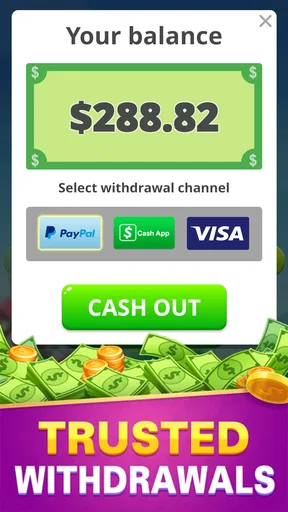
The reward concept creates another practical question: how much attention should I give to the financial side? My answer is cautious. I would read the in-app explanations carefully, keep expectations modest, and avoid making decisions based on an assumed hourly return. The store summary says players can earn real money rewards, but that phrase should not be interpreted as a guaranteed income stream. The app is still, first and foremost, a word game.
That distinction matters for people who are trying to manage their time. If a player spends long periods searching for small gains, the activity may stop being worthwhile even if the puzzles remain playable. I would compare the effort involved with the personal enjoyment I receive, not just with the possibility of a reward. This is one of the most important differences between trying the app casually and building it into a monthly routine.
How it compares with familiar word games
Compared with a crossword, this game is easier to enter because I do not need to construct answers from clues or know specialized vocabulary. Compared with a spelling challenge, it is more relaxed and visually oriented. Compared with a printed word-search book, it is more convenient when I already have my phone in hand, but less satisfying for someone who prefers a screen-free activity.
Compared with a typical free puzzle app, the money-focused positioning is the clearest point of difference. That can help the game stand out, but it also raises the standard for transparency and patience. A normal word-search app can succeed simply by being pleasant. This one has to make the reward-related experience feel understandable enough that players do not spend their sessions wondering what they are working toward.
For people who enjoy measurable improvement, a more demanding word game may offer better long-term stimulation. For people who want a gentle search exercise, Make Money: Word Search may be the better fit. I would choose based on the kind of attention I want to use, not just on the promise of earning something.
Maintenance and everyday friction
The maintenance burden is relatively easy to underestimate. Even a simple puzzle game asks me to manage my attention, device time, and expectations. I need to decide when to play, how long to continue, and whether the reward element is adding enjoyment or pressure. Those decisions are small, but they determine whether the app becomes a healthy convenience or another notification-driven habit.
The current release is version 1.0, so I would approach it as an early version of the experience rather than assuming it already has the depth of a mature puzzle platform. That does not make it a bad choice, but it does make my recommendation more conditional. Players who need a highly established game with years of accumulated content may prefer a familiar alternative.
The minimum operating system requirement is Android 5.1, which makes the game accessible to people using older Android devices. That is helpful if I am not carrying a recent phone, although device compatibility alone does not determine whether the experience will feel comfortable. Screen size, battery habits, and how easily I can read the letter grids will matter in everyday use.
I would also keep the age classification in mind before recommending it to anyone else. The mature 17+ label means the intended audience is adults, even though searching for words sounds broadly family-friendly. Parents should make their own decision rather than assuming the simple format tells the whole story.
Because the game is free, the cost barrier is low, but “free” does not mean the time cost is irrelevant. My practical rule would be to give it several short sessions, then review how often I am returning and why. If I cannot explain what I enjoy beyond the reward possibility, I would stop rather than letting curiosity turn into a routine that no longer feels rewarding.
Where fatigue can appear
The most obvious source of fatigue is repetition. Searching through grids can be relaxing, but the same visual behavior can become monotonous when there is not enough variation in themes, difficulty, or goals. I would notice this first as a change in attention: instead of scanning naturally, I would begin rushing, missing words, or opening the game without feeling interested.
Another source is the tension between leisure and productivity. The money message encourages me to think about efficiency, while word searches are usually enjoyable precisely because they are low pressure. If I start treating every puzzle like a task with an expected return, the calm quality of the game can disappear. This is a psychological trade-off that no feature list can resolve for me.
Reward-related uncertainty can create fatigue as well. A player may wonder how much effort is sensible, how progress translates into rewards, or when to stop. I would not recommend building a budget, income plan, or daily schedule around the game. Its reward promise may make it more interesting than a standard puzzle, but it should not be confused with dependable employment.
There is also a social limitation. Word searches are mainly solitary, so someone who enjoys competition, cooperation, or sharing results may find the experience quiet to the point of isolation. A multiplayer word game, a daily community puzzle, or a crossword group would be a better choice for players whose motivation comes from other people.
Finally, the game may not satisfy players who want escalating intellectual challenge. Finding hidden words tests observation and concentration, but it does not offer the same kind of reasoning as a cryptic crossword, logic puzzle, or word-building game. I would choose it for accessible focus, not for the deepest possible mental workout.
Ways I would keep the habit sustainable
My first tip would be to set a session boundary before opening the app. One puzzle or a short time window is enough to preserve the feeling of a break. This prevents the reward idea from quietly extending a five-minute activity into a much longer one.
Second, I would track enjoyment rather than only progress. After a few sessions, I would ask whether I feel refreshed, mildly entertained, or drained. That simple check reveals more about lasting value than a growing in-game figure. If the activity consistently leaves me tense, the practical answer is to reduce it or move on.
Third, I would use it at moments where a short, interruptible activity genuinely fits. Waiting in a queue is better than using it during a task that requires concentration. This keeps the game from competing with work, driving, conversations, or sleep. Its greatest strength is flexibility, so I would protect that strength by giving it a limited place in the day.
These habits also answer a common concern: can the game become a useful regular pastime without taking over? In my view, yes, but only if I treat the reward element as optional motivation and keep control of the schedule. The app is better suited to small pockets of free time than to long, intensive sessions.
My long-term verdict
Make Money: Word Search earns a trial from players who like straightforward word puzzles and are curious about a reward-oriented format. PAmos has chosen an instantly understandable activity, and the free entry makes it easy for me to test without a purchase decision. Its average rating is 4.8 from around 16 thousand ratings, while the game has passed 100 thousand installs, suggesting that many players have found the basic concept appealing.
Those figures make the app worth considering, but they do not settle the long-term question. A strong first impression can come from novelty, and a reward promise can encourage early engagement. What matters after that is whether the puzzles remain enjoyable enough to support a sustainable routine. I would not keep it installed merely because it might offer rewards; I would keep it if the word-search sessions themselves continue to fit my day.
The game is a good match for adults who want a simple, quiet activity, enjoy scanning letter grids, and are comfortable approaching the financial angle with realistic expectations. It is less suitable for children because of its mature age classification, for players seeking deep strategic variety, and for anyone looking for a dependable source of income. Those users would be better served by a conventional puzzle app, a more challenging word game, or a different kind of earning opportunity altogether.
After the novelty fades, I think the app’s future on my phone would depend on moderation. I would use it occasionally, keep sessions short, and reassess whether it still feels like entertainment rather than an obligation. Its lasting value comes from the habit of solving a few satisfying puzzles, not from treating a free game as a financial plan.
My final recommendation is therefore positive but measured. Try it if the combination of hidden-word puzzles and rewards genuinely interests you, and judge it over several ordinary days rather than one exciting first session. If the search itself keeps you engaged, it can earn a small place in a casual routine. If the reward promise is the only reason you return, the usual word-search alternative may provide a cleaner and more relaxing experience.
Verdict
Strengths of Make Money: Word Search
- Simple gameplay suitable for quick breaks or casual daily play.
- Large word-search format makes it easy to learn without instructions.
- Reward system can add motivation to complete more puzzles.
- Works well for players who enjoy vocabulary and observation challenges.
- Bright presentation keeps the puzzle boards easy to read.
Limitations of Make Money: Word Search
- Earnings may feel slow compared with the time required to play.
- Frequent ads can interrupt the flow between puzzles or rewards.
- Some rewards may require watching promotional videos.
- Puzzle difficulty may become repetitive for experienced players.
- Availability of features or rewards can vary by region and device.
Similar Picks in This Category
View All
Word Search - Word Puzzle Game
Bluetile4.8

Word Search Quest - Puzzles
Blackout Lab4.8

CodyCross: Crossword Puzzles
Fanatee, Inc.4.7

Words of Wonders: Crossword
Fugo Games4.9

Wordscapes: Word puzzle game
PeopleFun4.7

Word Search Explorer
PlaySimple Games4.9
Frequently Asked Questions
What is Make Money: Word Search?
Make Money: Word Search is a casual word puzzle game that combines traditional word-finding challenges with a rewards-based progression system. Players search for hidden words in letter grids, complete levels, and may receive in-game rewards for their activity. The game is designed for short sessions, making it suitable for users who enjoy vocabulary puzzles and want an additional incentive while playing.
How do you play Make Money: Word Search?
Gameplay is straightforward: each level presents a grid filled with letters, and you must locate the words listed on the screen. Words can usually appear horizontally, vertically, diagonally, or in reverse, depending on the puzzle. Dragging across the correct letters selects a word. As you advance, puzzles may become larger or more difficult, requiring greater concentration and faster recognition.
Can Make Money: Word Search really pay real money?
The app presents itself as a rewards-oriented word search game, but users should not assume that every advertised reward will become guaranteed cash. Earning conditions, minimum withdrawal limits, available payment methods, verification requirements, and regional restrictions may apply. Before investing significant time, review the current terms inside the app and treat rewards as a possible bonus rather than a dependable source of income.
Is Make Money: Word Search free to download and use?
Make Money: Word Search can generally be downloaded without an upfront purchase, allowing users to try the main word puzzle experience at no initial cost. However, free apps commonly include advertising, optional purchases, or limitations on energy, hints, and reward progress. Check the store listing and the in-app purchase information before downloading, especially if the device is used by children.
Is Make Money: Word Search safe for Android and iPhone users?
The safest way to install Make Money: Word Search is through the official Google Play Store or Apple App Store, where the listing, permissions, developer information, and user reviews can be checked. Avoid modified APK files or unofficial download pages. Also review the privacy policy and requested permissions, and never provide sensitive financial or identity information unless the app’s legitimacy and withdrawal process are clear.
Play our best games!


